

In industrial piping systems, precise flow regulation is essential for maintaining operational efficiency, safety, and process control. Whether managing steam in power plants, controlling chemicals in process industries, or regulating water flow in utility systems, industries require valves capable of delivering accurate throttling performance and dependable shutoff capability.
Among the many industrial valve types available today, the Globe Valve remains one of the most widely used solutions for flow control applications. Known for their excellent throttling characteristics, leak-tight sealing, and reliable operation under high-pressure and high-temperature conditions, globe valves are critical components in industries such as oil & gas, petrochemicals, power generation, marine, pharmaceuticals, and water treatment.
Unlike valves primarily designed for on/off isolation, globe valves are specifically engineered for regulating flow with high precision. Their internal design allows operators to control pressure and flow rate effectively, making them ideal for demanding process environments.
At Arrotop, globe valves are designed to provide reliable flow regulation, corrosion resistance, and long-term operational performance for modern industrial systems.
What is a Globe Valve?
A globe valve is a linear motion valve used to start, stop, and regulate fluid flow in a pipeline. It consists of a movable disc and a stationary ring seat housed within a spherical or globe-shaped body.
The valve operates by moving the disc perpendicular to the seat using a threaded stem. When the handwheel or actuator rotates, the disc moves upward or downward, controlling the flow passage area and regulating fluid flow.
Because of their design, globe valves provide:
- Excellent throttling capability
- Accurate flow control
- Reliable shutoff performance
- High-pressure handling capability
They are commonly used in systems requiring frequent operation and precise regulation.
How Does a Globe Valve Work?
The working principle of a globe valve is based on linear motion.
When the valve handwheel rotates:
- The stem moves upward or downward.
- The disc lifts away from or presses against the seat.
- The opening size changes, regulating fluid flow.
Valve Positions
| Valve Position | Function |
| Fully Open | Maximum flow |
| Partially Open | Flow throttling/regulation |
| Fully Closed | Complete shutoff |
Unlike gate valves, which are mainly designed for isolation, globe valves are highly efficient for controlling varying flow rates.
Main Components of a Globe Valve
Understanding globe valve construction helps industries select the right configuration for specific applications.
1. Valve Body
The body forms the main pressure-retaining structure of the valve.
Functions
- Houses internal components
- Directs fluid flow
- Withstands pressure and temperature loads
The internal body design significantly influences:
- Flow efficiency
- Pressure drop
- Throttling performance
2. Bonnet
The bonnet covers the valve opening and supports the stem assembly.
Types of Bonnet Designs
- Bolted bonnet
- Welded bonnet
- Pressure seal bonnet
Pressure seal bonnets are commonly used in high-pressure and high-temperature systems.
3. Disc
The disc controls fluid flow by moving toward or away from the seat.
Common Disc Types
- Plug disc
- Composition disc
- Needle disc
Disc design affects:
- Flow regulation
- Shutoff performance
- Wear resistance
4. Seat Ring
The seat ring provides the sealing surface against which the disc closes.
Seat Materials
- Stainless steel
- Stellite overlay
- Hardened alloys
- PTFE for low-pressure systems
5. Stem
The stem transfers rotational movement from the handwheel or actuator into linear disc movement.
6. Handwheel or Actuator
The valve may be operated manually or automatically using:
- Handwheel
- Pneumatic actuator
- Electric actuator
- Hydraulic actuator
Types of Globe Valves
Globe valves are available in several body configurations designed for different flow conditions and installation requirements.
1. Z-Type Globe Valve
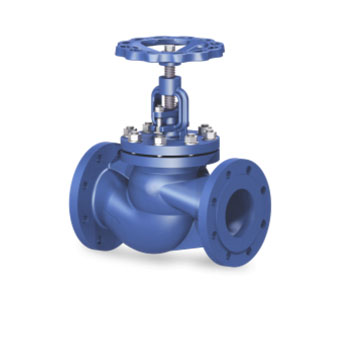
The Z-type globe valve is the most common design.
Features
- Straight internal partition
- Excellent throttling capability
- Reliable shutoff
Applications
- Steam systems
- Water treatment
- Process industries
2. Y-Type Globe Valve
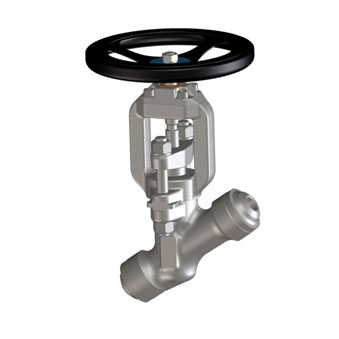
Y-type globe valves reduce pressure drop by angling the stem and seat arrangement.
Advantages
- Lower flow resistance
- Improved efficiency
- Better performance at high pressure
Common Uses
- High-pressure steam systems
- Power plants
- High-temperature applications
3. Angle Globe Valve
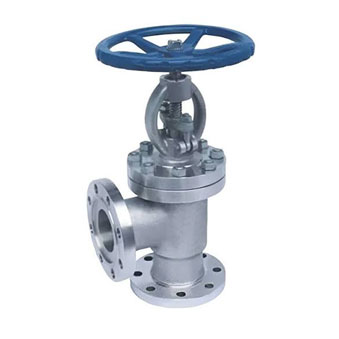
Angle globe valves change flow direction by 90 degrees.
Benefits
- Eliminates elbow fittings
- Reduces piping complexity
- Suitable for pulsating flow systems
Applications
- Boiler feed systems
- Cooling water systems
- Condensate applications
4. Pressure Seal Globe Valve
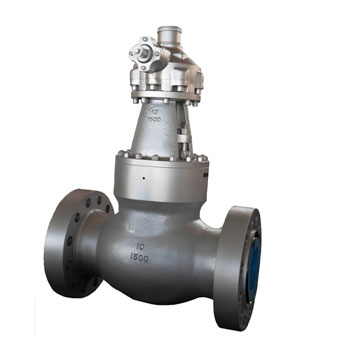
Designed for high-pressure and high-temperature service.
Features
- Enhanced sealing capability
- Improved operational safety
- Suitable for critical applications
5. Bellows Seal Globe Valve
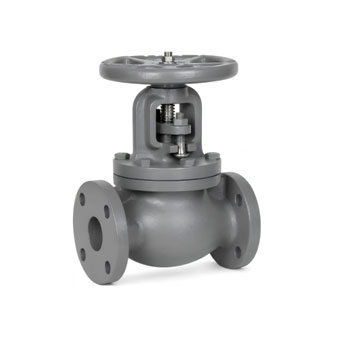
Bellows seal globe valves prevent leakage around the stem area.
Advantages
- Zero stem leakage
- Environmental protection
- Reduced maintenance
Applications
- Toxic media handling
- Hazardous chemical systems
- Steam applications
Globe Valve Materials
Material selection plays a critical role in valve durability, corrosion resistance, and temperature handling capability.
Common Globe Valve Materials
| Material | Key Features | Applications |
| Cast Iron | Economical | Water systems |
| Carbon Steel | High strength | Oil & gas |
| Stainless Steel 304 | Corrosion resistance | General industrial use |
| Stainless Steel 316 | Better chemical resistance | Chemical plants |
| Duplex Stainless Steel | High strength & chloride resistance | Offshore industries |
| Super Duplex Stainless Steel | Superior seawater resistance | Marine systems |
| Monel | Excellent seawater compatibility | Offshore & marine |
| Inconel | High-temperature resistance | Steam systems |
| Hastelloy | Chemical resistance | Aggressive chemical environments |
Advanced alloy materials such as Duplex, Monel, Inconel, and Hastelloy are increasingly used in severe service applications requiring superior corrosion resistance and long-term reliability.
Globe Valve End Connections
Different piping systems require different connection configurations.
Common End Types
- Flanged Ends
- Butt Weld Ends
- Socket Weld Ends
- Threaded Ends
The choice depends on:
- Pressure rating
- Process media
- Installation standards
- Maintenance accessibility
Globe Valve Pressure Ratings
Globe valves are manufactured according to various industrial standards.
Common Pressure Classes
- Class 150
- Class 300
- Class 600
- Class 900
- Class 1500
- Class 2500
High-pressure globe valves are widely used in steam and power generation systems.
Advantages of Globe Valves
Globe valves provide several operational benefits that make them ideal for flow control applications.
Key Benefits
Excellent Throttling Capability
Provides accurate flow regulation and pressure control.
Reliable Shutoff
Offers tight sealing and minimal leakage.
Suitable for Frequent Operation
Handles repeated opening and closing efficiently.
High-Pressure Compatibility
Performs well in demanding industrial systems.
Easy Maintenance
Internal components are accessible for servicing.
Better Flow Control Accuracy
Superior regulation compared to gate valves.
Limitations of Globe Valves
Despite their advantages, globe valves also have some limitations.
Common Drawbacks
- Higher pressure drop
- More operational torque required
- Larger size compared to some valve types
- Slower operation than quarter-turn valves
Proper valve sizing helps minimize these issues.
Industrial Applications of Globe Valves
Globe valves are widely used in industries requiring precise flow regulation and dependable shutoff.
1. Oil & Gas Industry
Used for:
- Process control systems
- Steam injection lines
- Pressure regulation systems
2. Power Generation Plants
Globe valves are critical in:
- Boiler feed systems
- Steam pipelines
- Turbine control systems
Y-type and pressure seal globe valves are commonly used in these applications.
3. Chemical Processing Industry
Corrosion-resistant globe valves regulate aggressive chemicals safely.
4. Marine & Offshore Industry
Duplex and Monel globe valves handle:
- Seawater systems
- Offshore process lines
- Ballast systems
5. Water Treatment Plants
Used for:
- Flow regulation
- Pump control
- Distribution systems
6. Pharmaceutical Industry
Stainless steel globe valves support hygienic process systems and clean fluid handling.
7. HVAC Systems
Used in:
- Chilled water systems
- Cooling towers
- Heat exchange systems
Globe Valve vs Gate Valve
Understanding the difference between globe and gate valves helps in selecting the right solution.
| Feature | Globe Valve | Gate Valve |
| Main Function | Flow regulation | Isolation |
| Throttling Capability | Excellent | Poor |
| Pressure Drop | Higher | Lower |
| Shutoff Performance | Very good | Excellent |
| Operating Speed | Slower | Faster |
| Flow Direction | Changes direction internally | Straight-through flow |
Globe Valve vs Ball Valve
| Feature | Globe Valve | Ball Valve |
| Flow Control | Precise throttling | Limited throttling |
| Shutoff Speed | Slower | Quick quarter-turn |
| Pressure Drop | Higher | Lower |
| Maintenance | Moderate | Lower |
| Best Use | Flow regulation | On/off isolation |
Important Selection Factors for Globe Valves
Selecting the correct globe valve requires careful evaluation of process conditions.
Key Selection Criteria
1. Pressure Rating
Choose valves suitable for operating and surge pressure.
2. Temperature Conditions
Material compatibility is critical in high-temperature systems.
3. Media Compatibility
Corrosive fluids require specialized alloys.
4. Flow Requirements
Valve size and trim design affect throttling performance.
5. End Connection Type
Threaded, flanged, or welded ends depend on system design.
6. Automation Needs
Actuated globe valves improve remote operation capability.
Maintenance Tips for Globe Valves
Routine maintenance improves service life and operational reliability.
Best Practices
- Inspect seat and disc wear
- Check stem packing for leakage
- Lubricate moving components
- Monitor pressure performance
- Replace damaged trim components
- Verify actuator functionality
Preventive maintenance reduces downtime and enhances valve performance.
Industry Trends in Globe Valve Technology
Modern industrial systems demand smarter, safer, and more efficient valve solutions.
Emerging Trends
- Smart actuated globe valves
- Low-emission sealing systems
- Advanced trim materials
- Cryogenic globe valves
- High-performance alloy valves
- Digital monitoring integration
Automation and predictive maintenance technologies are reshaping the future of industrial valve systems.
Why Industries Choose Arrotop Globe Valves
At Arrotop, globe valves are engineered for precision flow control, reliability, and industrial durability.
Key Features
- Precision-engineered valve construction
- Corrosion-resistant materials
- High-pressure compatibility
- Availability in Duplex, Monel & Inconel
- Reliable sealing performance
- Custom industrial valve solutions
- Long operational lifespan
Arrotop solutions are designed to support demanding industrial applications where safety, efficiency, and reliability are critical.
Conclusion
Globe valves remain one of the most important flow control solutions in modern industrial piping systems. Their ability to regulate flow accurately, withstand high pressures and temperatures, and provide dependable shutoff makes them indispensable across industries such as oil & gas, power generation, marine, chemical processing, and water treatment.
From Z-type and Y-type globe valves to advanced bellows seal and pressure seal designs, selecting the correct configuration and material is essential for long-term performance and operational safety.
With modern advancements in automation, sealing technology, and corrosion-resistant alloys such as Duplex, Monel, Inconel, and Hastelloy, globe valves continue to evolve to meet the demanding requirements of industrial process systems.
For industries seeking high-performance globe valve solutions engineered for reliability and durability, Arrotop delivers industrial-grade valve technologies built for modern applications.
Frequently Asked Questions (FAQs)
1. What is a globe valve used for?
A globe valve is primarily used for regulating, throttling, and controlling fluid flow in industrial piping systems.
2. Why are globe valves preferred for throttling applications?
Globe valves provide precise flow control due to their linear motion design and adjustable flow passage area.
3. What is the difference between a globe valve and a gate valve?
Globe valves are designed for flow regulation, while gate valves are mainly used for full open or full close isolation applications.
4. Which industries commonly use globe valves?
Globe valves are widely used in:
- Oil & gas
- Power generation
- Chemical processing
- Marine industries
- HVAC systems
- Water treatment plants
5. What materials are used for globe valves?
Common materials include:
- Carbon steel
- Stainless steel
- Duplex stainless steel
- Monel
- Inconel
- Hastelloy
6. Can globe valves handle high temperatures?
Yes. Pressure seal and alloy globe valves are commonly used in high-temperature steam and power plant applications.
7. What are the main types of globe valves?
The main types include:
- Z-type globe valve
- Y-type globe valve
- Angle globe valve
- Pressure seal globe valve
- Bellows seal globe valve
8. What are the disadvantages of globe valves?
Globe valves may create higher pressure drop and require more operating torque compared to some other valve types.