
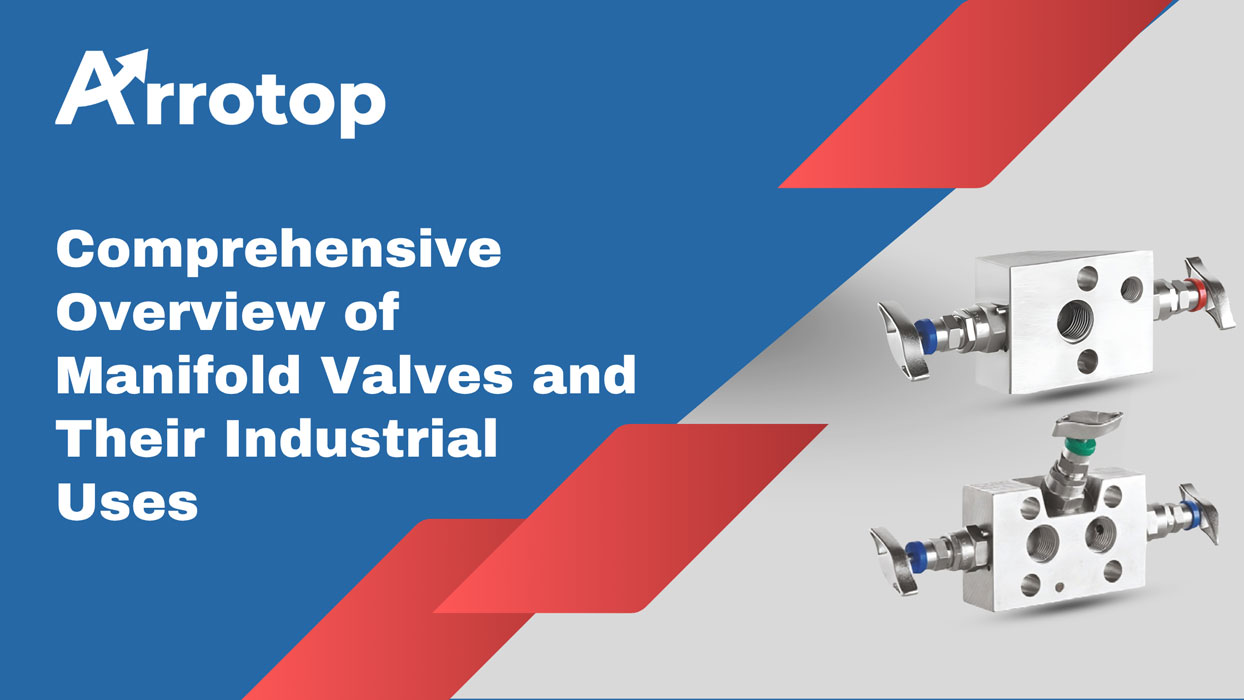
In modern industrial process systems, precise pressure control, safe isolation, and reliable instrumentation are essential for maintaining operational efficiency and plant safety. Whether in oil & gas facilities, chemical processing plants, power stations, or pharmaceutical industries, instrumentation systems rely heavily on compact and efficient valve assemblies to regulate pressure and control fluid flow accurately.
One of the most critical components used in these systems is the Manifold Valve.
Manifold valves simplify piping arrangements by integrating multiple valve functions into a single compact assembly. These valves reduce leakage points, improve safety, simplify maintenance, and enhance the performance of pressure measurement and instrumentation systems.
From conventional 2-valve and 3-valve manifolds to advanced 5-valve and T-type manifold valves, industries increasingly rely on manifold valve systems for efficient pressure management and instrument isolation.
At Arrotop, manifold valves are engineered to provide reliable performance, corrosion resistance, and long-term durability for critical industrial applications.
What is a Manifold Valve?
A manifold valve is a compact assembly consisting of multiple valves integrated into a single body. It is primarily used in instrumentation systems to isolate, equalize, vent, drain, or calibrate pressure instruments such as:
- Pressure transmitters
- Differential pressure transmitters
- Pressure gauges
- Flow measurement systems
Instead of installing separate isolation and vent valves individually, manifold valves combine these functions into one unit, reducing piping complexity and minimizing potential leakage points.
Why Are Manifold Valves Important?
Industrial instrumentation systems operate under high pressure, extreme temperatures, and hazardous conditions. Reliable pressure control and instrument isolation are essential for:
- Operational safety
- Accurate pressure measurement
- Reduced downtime
- Simplified maintenance
- Leak prevention
Manifold valves help achieve these goals by offering a centralized and compact valve arrangement.
Working Principle of a Manifold Valve
The working principle of a manifold valve depends on its configuration and number of valves.
Typically, manifold valves perform three main functions:
- Isolation
- Equalization
- Venting or draining
For example, in a differential pressure transmitter setup:
- Isolation valves separate the transmitter from process pressure.
- Equalizing valves balance pressure between high and low-pressure sides.
- Vent or drain valves release trapped pressure for maintenance or calibration.
This arrangement ensures safe instrument servicing without shutting down the entire process system.
Main Components of a Manifold Valve
A manifold valve assembly consists of several precision-engineered components.
1. Valve Body
The valve body houses all internal components and flow passages.
Key Features
- Compact design
- High-pressure resistance
- Corrosion-resistant construction
- Reduced leakage paths
2. Isolation Valves
Isolation valves control the flow of process media to the instrument.
Functions
- Isolate instruments during maintenance
- Protect instruments from pressure surges
- Prevent process leakage
3. Equalizing Valve
The equalizing valve balances pressure between two process lines.
Importance
This function is critical during:
- Instrument calibration
- Start-up procedures
- Differential pressure measurement
4. Vent/Drain Valve
Vent valves release trapped gases, while drain valves remove liquids from the system.
5. Stem and Packing
The valve stem controls internal valve movement, while packing ensures leak-tight sealing.
Types of Manifold Valves
Manifold valves are categorized based on the number of valves integrated into the assembly.
1. 2-Valve Manifold
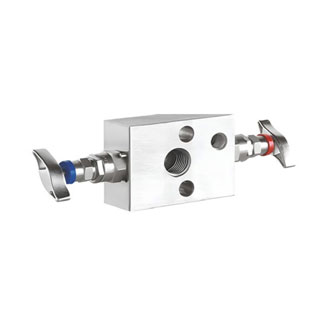
A 2-valve manifold includes:
- One isolation valve
- One vent or drain valve
Applications
- Pressure gauges
- Static pressure transmitters
- Instrument calibration systems
Advantages
- Compact design
- Easy installation
- Reduced leak points
2. 3-Valve Manifold
A 3-valve manifold includes:
- Two isolation valves
- One equalizing valve
Working Principle
The equalising valve balances pressure between high and low-pressure ports during calibration or maintenance.
Applications
- Differential pressure transmitters
- Flow measurement systems
Industries
- Oil & gas
- Chemical plants
- Refineries
3. 5-Valve Manifold
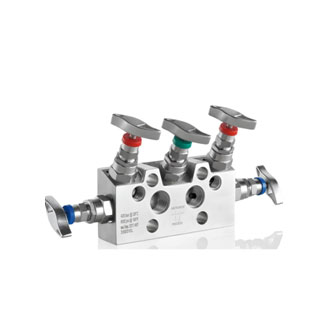
A 5-valve manifold contains:
- Two isolation valves
- One equalizing valve
- Two vent/drain valves
Key Advantages
- Improved maintenance capability
- Better pressure release control
- Enhanced calibration flexibility
Applications
- Critical instrumentation systems
- High-pressure process plants
4. T-Type Manifold Valve
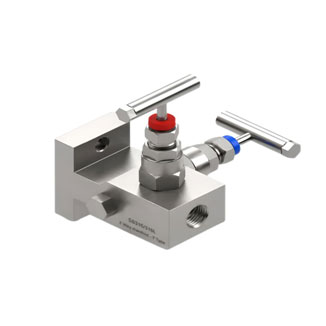
The T-Type Manifold Valve is one of the most widely used compact manifold configurations in industrial instrumentation systems.
The design resembles the shape of the letter “T,” where the inlet and outlet flow paths intersect within a compact body arrangement.
Features of T-Type Manifold Valves
- Compact and space-saving design
- Reduced tubing connections
- Lower leakage risk
- Simplified installation
- High-pressure handling capability
Applications of T-Type Manifold Valves
T-type manifold valves are commonly used in:
- Pressure transmitters
- Differential pressure systems
- Process instrumentation
- Chemical plants
- Offshore platforms
- Power generation systems
Benefits of T-Type Design
Compared to traditional piping arrangements, T-type manifold valves:
- Reduce installation complexity
- Improve instrument accessibility
- Lower maintenance requirements
- Enhance system reliability
T-type manifolds are particularly valuable in compact control panel systems and instrumentation assemblies where space optimization is important.
5. Block and Bleed Manifold Valves
Block and bleed manifolds isolate pressure while safely venting trapped media.
Common Uses
- Hazardous process systems
- High-pressure pipelines
- Oil & gas facilities
Materials Used in Manifold Valves
Material selection directly affects valve performance, corrosion resistance, pressure handling, and operational lifespan.
Common Materials
| Material | Properties | Applications |
| Stainless Steel 304 | General corrosion resistance | Industrial instrumentation |
| Stainless Steel 316 | Excellent chemical resistance | Chemical & offshore |
| Carbon Steel | High strength | General industrial systems |
| Brass | Good machinability | Low-pressure applications |
| Duplex Stainless Steel | Superior strength & corrosion resistance | Offshore environments |
| Super Duplex Stainless Steel | Extreme chloride resistance | Marine applications |
| Monel | Seawater compatibility | Offshore & marine |
| Inconel | High-temperature performance | Steam & high-heat systems |
| Hastelloy | Aggressive chemical resistance | Chemical processing plants |
Advanced alloys such as Duplex, Monel, Inconel, and Hastelloy are increasingly preferred in corrosive and high-temperature industrial environments.
End Connection Types in Manifold Valves
Manifold valves are available with different end connections depending on installation requirements.
Common End Connections
- NPT Threaded
- BSP Threaded
- Flanged Connections
- Socket Weld
- Butt Weld
- Compression Tube Fittings
The choice depends on:
- Pressure rating
- Process media
- Installation standards
- Maintenance accessibility
Pressure Ratings and Specifications
Manifold valves are designed for demanding industrial conditions.
Typical Specifications
| Parameter | Range |
| Pressure Rating | Up to 10,000 PSI or higher |
| Temperature Range | Cryogenic to high-temperature service |
| Valve Size | 1/4” to 1” and above |
| Leakage Class | Bubble-tight sealing |
| Operation | Manual or automated |
Industrial Applications of Manifold Valves
Manifold valves are widely used across multiple industries due to their compact design and instrumentation reliability.
1. Oil & Gas Industry
Used for:
- Pressure monitoring systems
- Differential pressure transmitters
- Pipeline instrumentation
- Offshore platforms
High-pressure and corrosion-resistant manifolds are critical in these environments.
2. Chemical Processing Plants
Manifold valves safely handle:
- Corrosive chemicals
- Hazardous fluids
- High-temperature process media
3. Power Generation Plants
Used in:
- Boiler instrumentation
- Steam pressure monitoring
- Turbine control systems
4. Pharmaceutical Industry
Compact manifold systems support:
- Clean instrumentation lines
- Sterile process systems
- Precision pressure control
5. Marine & Offshore Applications
Duplex and Monel manifold valves provide excellent resistance against seawater corrosion.
6. Water Treatment Plants
Used for:
- Pressure transmitters
- Instrument calibration
- Pneumatic systems
Advantages of Manifold Valves
Manifold valves provide significant operational and maintenance benefits.
Key Benefits
Reduced Leakage Points
Integrated valve assemblies minimize pipe fittings and potential leak paths.
Compact Design
Space-saving construction simplifies installation in tight process areas.
Simplified Maintenance
Isolation and venting functions allow easy calibration and servicing.
Improved Safety
Operators can isolate instruments safely without shutting down the process line.
Cost Savings
Reduced fittings and tubing lower installation and maintenance costs.
Better Instrument Protection
Pressure equalization helps protect sensitive instrumentation equipment.
Difference Between Traditional Valve Assemblies and Manifold Valves
| Feature | Traditional Assembly | Manifold Valve |
| Number of Fittings | Higher | Lower |
| Leakage Risk | Higher | Lower |
| Installation Space | Larger | Compact |
| Maintenance | Complex | Simplified |
| Cost Efficiency | Moderate | Better long-term value |
Design Considerations When Selecting a Manifold Valve
Choosing the correct manifold valve requires evaluating several technical factors.
Important Selection Criteria
1. Pressure Rating
Ensure compatibility with operating and surge pressures.
2. Temperature Conditions
Material selection must suit process temperatures.
3. Media Compatibility
Corrosive fluids require specialized alloys.
4. Number of Valve Functions
Choose between 2-valve, 3-valve, 5-valve, or T-type configurations.
5. Connection Type
Select appropriate threaded, welded, or flanged ends.
6. Installation Space
Compact systems may require T-type manifold valves.
Common Problems in Manifold Valve Systems
Improper installation or maintenance can lead to operational issues.
Common Challenges
- Leakage at connections
- Corrosion damage
- Valve seat wear
- Improper calibration
- Pressure imbalance
- Contamination buildup
Routine inspection and correct material selection significantly improve system reliability.
Maintenance Tips for Manifold Valves
Regular maintenance ensures long service life and operational accuracy.
Best Practices
- Inspect seals and packing regularly
- Check for leakage
- Clean vent and drain passages
- Verify pressure integrity
- Lubricate valve stems if required
- Replace damaged components promptly
Preventive maintenance minimizes downtime and instrumentation failure risks.
Industry Trends in Manifold Valve Technology
Industrial instrumentation systems are evolving toward greater automation and safety.
Emerging Trends
- Compact integrated manifold systems
- Smart instrumentation integration
- High-pressure manifold assemblies
- Fire-safe manifold valves
- Low-emission sealing technologies
- Advanced corrosion-resistant alloys
Modern process industries increasingly demand customized manifold valve solutions optimized for specific operating conditions.
Advantages of Valve Manifolds
Valve manifolds provide far more than simple pressure isolation. Their integrated design improves system reliability, reduces installation complexity, enhances maintenance safety, and increases the overall efficiency of industrial instrumentation systems.
1. Simplified Instrument Isolation
Valve manifolds allow pressure instruments to be isolated quickly without interrupting the main process. Maintenance personnel can safely remove, inspect, calibrate, or replace transmitters while the plant continues operating, significantly reducing downtime.
2. Improved Operator Safety
Pressure systems often operate under hazardous conditions involving high pressure, elevated temperatures, or corrosive media. Valve manifolds provide controlled isolation, venting, and draining of process pressure before maintenance begins, minimizing the risk of accidental exposure and improving workplace safety.
3. Accurate Instrument Calibration
Differential pressure transmitters require equalization before calibration or removal. Valve manifolds provide dedicated equalizing valves that balance pressure across the transmitter, preventing damage to sensitive sensing elements and ensuring accurate calibration results.
4. Reduced Leakage Points
Because several valve functions are integrated into one compact assembly, valve manifolds require fewer threaded or welded connections than traditional piping arrangements. Fewer joints mean fewer potential leak paths, resulting in improved process integrity and reduced maintenance requirements.
5. Compact and Space-Saving Design
Modern industrial plants often have limited installation space. Valve manifolds combine isolation, equalization, venting, and draining functions within a single assembly, reducing the overall footprint while simplifying instrument mounting.
6. Faster Installation
Pre-engineered valve manifolds eliminate the need for multiple individual valves and complex tubing arrangements. This shortens installation time, lowers labor costs, and simplifies system commissioning.
7. Reduced Maintenance Time
Routine inspection, testing, calibration, and replacement of pressure instruments become significantly faster because all required valve functions are readily accessible within one assembly. This reduces maintenance costs and improves plant productivity.
8. Enhanced Process Reliability
Reliable pressure measurement is essential for safe and efficient process control. Valve manifolds help maintain measurement accuracy by protecting transmitters during startup, shutdown, calibration, and maintenance operations, contributing to stable process performance.
9. Cost-Effective System Design
Although a valve manifold combines multiple valves into one unit, it often reduces the overall project cost by minimizing fittings, tubing, installation labor, maintenance time, and inventory requirements.
10. Long Service Life
Valve manifolds manufactured from premium materials such as SS 316, SS 316L, Monel, Hastelloy, Inconel, Duplex, and Super Duplex alloys offer exceptional resistance to corrosion, pressure, temperature fluctuations, and aggressive process media. Their robust construction ensures dependable performance and a long operational lifespan, even in demanding industrial environments.
11. Versatility Across Industries
Valve manifolds are suitable for virtually any process requiring pressure instrumentation. Their ability to integrate seamlessly with pressure transmitters, differential pressure transmitters, gauges, and switches makes them an essential component in industries such as oil & gas, petrochemicals, power generation, pharmaceuticals, food processing, water treatment, marine engineering, and chemical manufacturing.
12. Compliance with International Standards
High-quality valve manifolds are manufactured in accordance with internationally recognized standards for design, materials, pressure ratings, and testing. This ensures consistent performance, compatibility with modern instrumentation systems, and reliable operation in critical industrial applications.
Why Industries Choose Arrotop Manifold Valves
At Arrotop, manifold valves are designed to meet the reliability, safety, and performance requirements of modern industrial instrumentation systems.
Key Features
- Precision-engineered construction
- Compact and durable designs
- Corrosion-resistant materials
- Availability in SS316, Duplex, Monel & Inconel
- High-pressure handling capability
- Reliable sealing performance
- Custom instrumentation solutions
Arrotop manifold valves are engineered to support industries operating in demanding environments where operational accuracy and safety are critical.
Conclusion
Manifold valves are essential components in industrial instrumentation and pressure control systems. By integrating multiple valve functions into a compact assembly, they simplify piping layouts, reduce leakage points, improve safety, and enhance operational efficiency.
Whether used in oil & gas, power generation, chemical processing, offshore installations, or pharmaceutical plants, manifold valves play a critical role in ensuring accurate pressure measurement and safe instrument isolation.
From standard 2-valve and 3-valve designs to advanced 5-valve and T-type manifold valves, selecting the correct configuration and material is crucial for long-term reliability and performance.
For industries seeking dependable and high-performance instrumentation solutions, Arrotop provides manifold valves engineered for precision, durability, and industrial excellence.