
What are Steam Traps?
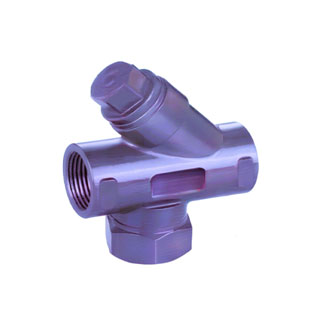
Steam traps are essential automatic valves designed to remove condensate, air, and other non-condensable gases from steam systems while preventing the loss of valuable live steam. They play a critical role in maintaining energy efficiency, protecting equipment, and ensuring consistent process performance across industrial applications.
At Arrotop, our steam traps are engineered with precision and manufactured from high-quality materials to deliver reliable operation under demanding temperature and pressure conditions. By automatically discharging condensate as it forms, they improve heat transfer efficiency, reduce steam wastage, minimize the risk of water hammer, and extend the service life of steam equipment.
Designed for industries such as oil & gas, chemical processing, pharmaceuticals, food & beverage, power generation, textiles, and HVAC systems, Arrotop Steam Traps provide dependable performance with minimal maintenance requirements. Whether used in steam distribution lines, heat exchangers, tracing systems, or process equipment, they ensure smooth operation and optimized energy utilization.
Why are Steam Traps Installed?
Steam is produced when water undergoes vaporization to transform into a gas. For this vaporization process to take place, the water molecules must receive sufficient energy to break the bonds between them, including hydrogen bonds. This energy required to convert a liquid into a gas is referred to as ‘latent heat’.
In steam-based heating processes, latent heat is utilized and transferred to a specific product. Once this process is completed (i.e., steam releases its latent heat), it condenses back into water, known as condensate. Essentially, condensate lacks the capacity to perform the same work as steam. Therefore, heating efficiency will be compromised if condensate is not promptly removed, whether it’s within steam transport piping or in a heat exchanger.
The Hidden Cost of Steam Loss in Industrial Facilities
Many industrial facilities invest heavily in boilers, steam distribution networks, heat exchangers, pressure-reducing stations, and process equipment to maximize thermal efficiency. However, even the most advanced steam systems can suffer significant performance losses if condensate is not properly managed.
According to industry estimates, steam-related energy losses account for a substantial percentage of avoidable operational expenses in manufacturing plants. In many cases, these losses are not caused by boiler inefficiencies but by improper condensate removal, steam leakage, and malfunctioning steam traps.
At Arrotop, a steam trap’s role may seem simple, but its impact extends throughout the entire steam system. A properly functioning steam trap can improve energy efficiency, reduce fuel consumption, increase equipment life, enhance product quality, and lower maintenance costs. Conversely, a failed steam trap can silently waste thousands of dollars in energy every year.
This makes steam traps one of the highest-return investments in industrial energy management.
Understanding the Relationship Between Steam, Condensate, and Energy Loss
Steam carries a large amount of latent heat energy. This stored energy is what makes steam such an effective heating medium.
When steam reaches a process:
- Heat transfers from steam to the product or equipment.
- Steam loses latent heat.
- Steam condenses into water.
- Condensate forms inside the system.
While steam is highly effective at transferring heat, condensate is not.
If condensate remains in steam lines:
- Heat transfer efficiency decreases.
- Production rates slow down.
- Steam consumption increases.
- Pressure fluctuations occur.
- Water hammer risks increase.
The purpose of a steam trap is to remove condensate immediately while retaining valuable live steam within the system.
The True Cost of Live Steam Loss
One of the biggest challenges in steam systems is invisible energy waste.
Unlike water leaks that are easily visible, steam losses often go unnoticed.
A failed-open steam trap continuously discharges live steam into the condensate return system.
The consequences include:
Increased Boiler Fuel Consumption
Every kilogram of lost steam must be replaced by generating additional steam.
This requires:
- More fuel
- More water
- More chemical treatment
- More boiler operation
Higher Utility Costs
Steam generation is one of the most expensive utilities in industrial facilities.
Steam loss directly increases:
- Natural gas consumption
- Coal consumption
- Electricity usage
- Water treatment expenses
Reduced Production Efficiency
Process equipment receives less usable steam.
This leads to:
- Longer heating cycles
- Reduced throughput
- Lower productivity
Increased Carbon Emissions
More fuel consumption results in:
- Higher CO₂ emissions
- Greater environmental impact
- Reduced sustainability performance
For industries pursuing ESG goals and carbon reduction initiatives, steam trap performance plays a surprisingly significant role.
How Steam Traps Improve Heat Transfer Efficiency
Heat transfer is the primary reason steam is used in industrial processes.
For steam to transfer heat effectively:
- Steam must contact the heating surface.
- Condensate must be removed rapidly.
- Air must be vented.
- Pressure must remain stable.
When condensate accumulates:
Insulating Effect
Water creates an insulating barrier between steam and the heat transfer surface.
This significantly reduces heating efficiency.
Lower Process Temperatures
Heat exchangers, reactors, and process vessels may not reach their desired operating temperatures.
This can impact:
- Product quality
- Batch consistency
- Process performance
Increased Production Time
Equipment requires longer operating cycles to achieve target temperatures.
As a result:
- Production rates decrease.
- Energy consumption increases.
- Operating costs rise.
Efficient steam traps eliminate these issues by continuously removing condensate and maintaining optimal heat transfer conditions.
The Role of Steam Traps in Condensate Recovery Systems
Modern industrial facilities increasingly focus on condensate recovery.
Condensate contains valuable:
- Thermal energy
- Treated water
- Boiler chemicals
Recovering condensate provides significant economic benefits.
Steam traps support condensate recovery by:
- Separating condensate from steam.
- Directing condensate back to the boiler house.
- Maintaining return system efficiency.
- Preventing steam contamination.
Benefits of condensate recovery include:
Reduced Water Consumption
Less makeup water is required.
Lower Water Treatment Costs
Recovered condensate has already been treated.
Reduced Boiler Fuel Demand
Hot condensate requires less energy to convert back into steam.
Improved Boiler Efficiency
Higher feedwater temperatures improve overall boiler performance.
How Steam Traps Prevent Water Hammer
Water hammer is one of the most destructive events in a steam system.
It occurs when condensate accumulates and is suddenly accelerated by high-velocity steam.
The resulting shock waves can damage:
- Steam pipes
- Valves
- Heat exchangers
- Pressure gauges
- Instrumentation
- Pipe supports
In severe cases, water hammer can lead to catastrophic failures.
Causes of Water Hammer
Common causes include:
- Blocked steam traps
- Undersized steam traps
- Poor condensate drainage
- Improper piping design
Steam Trap Solution
Properly functioning steam traps:
- Remove condensate continuously.
- Prevent condensate accumulation.
- Reduce hydraulic shock.
- Protect equipment integrity.
This directly contributes to improved plant safety and reliability.
Steam Traps and Boiler Efficiency
Steam traps indirectly influence boiler performance.
A boiler’s efficiency depends on:
- Stable load conditions
- Proper condensate return
- Reduced steam losses
When steam traps fail:
Boiler Load Increases
The boiler must compensate for lost steam.
Fuel Consumption Rises
More fuel is required to generate replacement steam.
Equipment Wear Accelerates
Boilers cycle more frequently and operate under greater stress.
Maintenance Costs Increase
Additional strain impacts:
- Burners
- Pumps
- Controls
- Feedwater systems
Proper steam trap maintenance reduces these operational burdens.
Features of Modern Industrial Steam Traps
Today’s steam traps incorporate advanced engineering for enhanced performance.
High-Efficiency Condensate Discharge
Modern traps rapidly remove condensate while minimizing steam loss.
Compact Design
Space-saving construction simplifies installation.
High Pressure Capability
Suitable for low-pressure and high-pressure steam systems.
Corrosion Resistance
Available in:
- Cast Steel
- Carbon Steel
- Stainless Steel
- Alloy Steel
Long Service Life
Designed for years of reliable operation under demanding conditions.
Minimal Maintenance Requirements
Modern designs reduce maintenance frequency and downtime.
Types of Steam Traps
Steam traps are automatic valves designed to discharge condensate, air, and other non-condensable gases from a steam system while preventing the loss of live steam. Selecting the right type of steam trap improves energy efficiency, enhances equipment performance, and reduces operating costs.
1. Thermodynamic Steam Traps
Working Principle
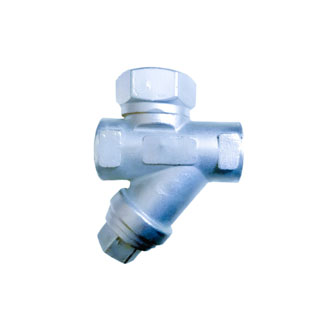
Thermodynamic steam traps operate based on the difference in velocity and pressure between steam and condensate. A disc opens when condensate enters and closes when high-velocity steam creates a pressure difference above the disc.
Features
- Compact and lightweight design
- Single moving part for reliable operation
- Resistant to water hammer and superheated steam
- Suitable for high-pressure applications
Applications
- Steam distribution lines
- Steam tracing systems
- Drip stations
- Outdoor installations
Advantages
- Durable and easy to maintain
- Operates over a wide pressure range
- Corrosion-resistant construction
- Low maintenance requirements
2. Mechanical Steam Traps
Working Principle
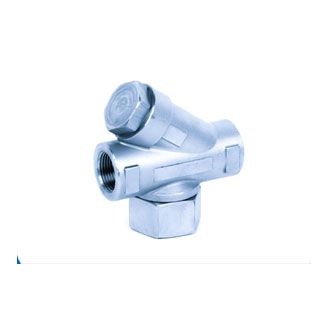
Mechanical steam traps work based on the density difference between steam and condensate. As condensate accumulates, a float or bucket mechanism moves to open the valve and discharge the condensate.
Common Types
- Float & Thermostatic (F&T) Trap
- Inverted Bucket Trap
Features
- Continuous condensate discharge
- Excellent air venting capability
- High efficiency under varying loads
Applications
- Heat exchangers
- Process equipment
- HVAC systems
- Large condensate loads
Advantages
- High condensate handling capacity
- Stable performance under fluctuating loads
- Minimal steam loss
- Long service life
3. Thermostatic Steam Traps
Working Principle
Thermostatic steam traps operate according to temperature differences between steam and condensate. The valve remains open when condensate is cooler than steam and closes as steam temperature reaches saturation.
Features
- Automatic air venting during startup
- Energy-efficient operation
- Responds to condensate temperature
Applications
- Unit heaters
- Sterilizers
- Steam tracing
- Low and medium capacity process equipment
Advantages
- Excellent removal of air and non-condensable gases
- Reduces steam consumption
- Suitable for applications requiring sub-cooled condensate discharge
- Simple and reliable design
4. Bi-metallic Steam Traps
Working Principle
Bi-metallic steam traps are a type of thermostatic trap that uses stacked bi-metallic strips. As temperature increases, the strips bend and close the valve. When condensate cools, the strips return to their original position, opening the valve.
Features
- Rugged construction
- Handles high pressures and superheated steam
- Adjustable operating characteristics
- Compact design
Applications
- Steam tracing systems
- High-pressure process lines
- Outdoor installations
- Superheated steam services
Advantages
- Highly durable
- Excellent resistance to water hammer
- Low maintenance
- Long operational life
- Energy-efficient condensate discharge
Quick Comparison Table
| Type | Operating Principle | Best For | Main Advantage |
| Thermodynamic | Dynamic pressure difference | Steam mains & drip applications | Compact, durable, high-pressure capability |
| Mechanical | Density difference (float/bucket) | Process equipment & heat exchangers | Continuous condensate removal |
| Thermostatic | Temperature difference | Steam tracing & heating applications | Excellent air venting and energy savings |
| Bi-metallic | Temperature-sensitive bi-metal strips | High-pressure & superheated steam systems | Rugged design with low maintenance |
Selection Guide
- Choose Thermodynamic for steam distribution and outdoor services.
- Choose Mechanical for continuous condensate removal in process equipment.
- Choose Thermostatic where efficient air venting and temperature control are important.
- Choose Bi-metallic for high-pressure, superheated steam, and steam tracing applications requiring robust performance.
Material Options
- 316/L Stainless Steel, 304/L Stainless Steels, Carbon Steel, Alloy Steel, Other alloys available upon request
Connection Types
- Screwed, flanged, socket-welded, butt-welded
Sizes
- 1/2″ to 2″ and larger sizes on request
Performance
- Pressure Rating: Up to 600 psi (41 bar)
- Temperature Rating: Up to 800°F (427°C)
- Flow Characteristics: Suitable for a wide range of flow rates
- Standards Compliance: ASME, API, ISO, and other relevant standards
Industries That Depend on Steam Trap Performance
Oil and Gas Industry
Steam traps are used in:
- Refineries
- Petrochemical plants
- Steam tracing systems
- Process heating units
Reliable steam management directly impacts production efficiency.
Chemical Processing Plants
Steam traps support:
- Reactor heating
- Distillation columns
- Heat exchangers
- Process vessels
Food and Beverage Industry
Applications include:
- Sterilization
- Cooking systems
- Drying operations
- Packaging processes
Consistent steam quality is essential for product quality.
Pharmaceutical Manufacturing
Steam traps help maintain:
- Clean steam systems
- Sterilization processes
- Regulatory compliance
Textile Industry
Used extensively in:
- Dyeing equipment
- Drying cylinders
- Process heating systems
Paper and Pulp Industry
Steam traps improve performance in:
- Drying sections
- Paper machines
- Process heating systems
Power Generation
Critical for:
- Turbine systems
- Condensate return systems
- Steam distribution networks
Key Benefits of Steam Trap Audits
Many facilities conduct regular steam trap audits.
These inspections identify:
- Failed-open traps
- Failed-closed traps
- Undersized traps
- Installation problems
Benefits include:
Immediate Energy Savings
Replacing failed traps often generates rapid ROI.
Improved System Reliability
Reduced equipment failures.
Lower Maintenance Costs
Early detection prevents major problems.
Increased Production Efficiency
Stable steam supply improves process performance.
Reduced Environmental Impact
Lower fuel consumption reduces emissions.
Steam Trap Monitoring Technologies
Modern plants increasingly utilize smart monitoring systems.
These systems provide:
- Real-time performance data
- Failure alerts
- Energy loss calculations
- Predictive maintenance insights
Benefits include:
- Reduced inspection costs
- Improved reliability
- Enhanced operational visibility
Digital monitoring is becoming a standard feature in advanced steam management programs.
Common Steam Trap Selection Factors
Choosing the right steam trap requires evaluating multiple process parameters.
Operating Pressure
The trap must handle system pressure safely.
Condensate Load
Trap capacity must match condensate generation rates.
Application Type
Different applications require different trap technologies.
Temperature Conditions
Operating temperatures influence material selection.
Maintenance Accessibility
Serviceability should be considered during design.
Corrosion Environment
Material compatibility affects longevity and performance.
Why Steam Trap Maintenance Should Never Be Ignored
Steam traps operate continuously.
Over time, wear can occur due to:
- Erosion
- Corrosion
- Thermal cycling
- Contaminants
Routine maintenance helps:
- Prevent steam losses
- Improve efficiency
- Extend equipment life
- Reduce downtime
A proactive maintenance strategy often delivers substantial annual cost savings.
Why Industrial Facilities Choose Arrotop Steam Solutions
At Arrotop, steam system components are engineered to support the demanding requirements of modern industrial facilities.
Designed for durability, performance, and operational efficiency, Arrotop solutions help industries:
- Improve steam utilization
- Reduce energy losses
- Enhance process reliability
- Protect valuable equipment
- Support long-term operational performance
Whether used in power plants, chemical facilities, refineries, pharmaceutical plants, food processing units, or manufacturing operations, reliable steam management remains essential for maximizing plant efficiency.
Final Thoughts: Small Component, Massive Impact
Steam traps may be among the smallest components in a steam network, but their impact on energy efficiency, operational reliability, and plant profitability is enormous.
A properly selected and maintained steam trap helps:
✔ Reduce steam loss
✔ Improve heat transfer
✔ Lower fuel consumption
✔ Protect equipment
✔ Prevent water hammer
✔ Increase production efficiency
✔ Extend asset life
✔ Reduce carbon emissions
✔ Improve condensate recovery
✔ Lower operating costs
As industries continue to focus on sustainability, efficiency, and cost optimization, steam traps remain one of the most valuable investments in modern steam system management. Facilities that prioritize steam trap performance consistently achieve better energy efficiency, improved plant reliability, and stronger long-term financial performance.
Conclusion
Steam traps may appear to be small components within a steam system, but their impact on industrial performance is significant. By efficiently removing condensate, air, and non-condensable gases while preventing the escape of live steam, steam traps help maintain optimal heat transfer, reduce fuel consumption, and improve overall plant efficiency.
A well-designed and properly maintained steam trap system offers multiple long-term benefits, including lower energy costs, reduced carbon emissions, protection against water hammer, improved equipment lifespan, and enhanced production reliability. Industries such as oil & gas, chemical processing, power generation, pharmaceuticals, food processing, textiles, and paper manufacturing all depend on efficient steam management to achieve consistent operational performance.
For engineers, procurement teams, and plant operators, investing in high-quality steam traps and implementing regular steam trap audits is one of the most effective ways to optimize steam systems and reduce avoidable energy losses.
At Arrotop, steam system solutions are engineered to support demanding industrial applications with reliability, durability, and performance-focused design. Choosing the right steam management components today can lead to substantial operational savings and improved plant performance for years to come.