
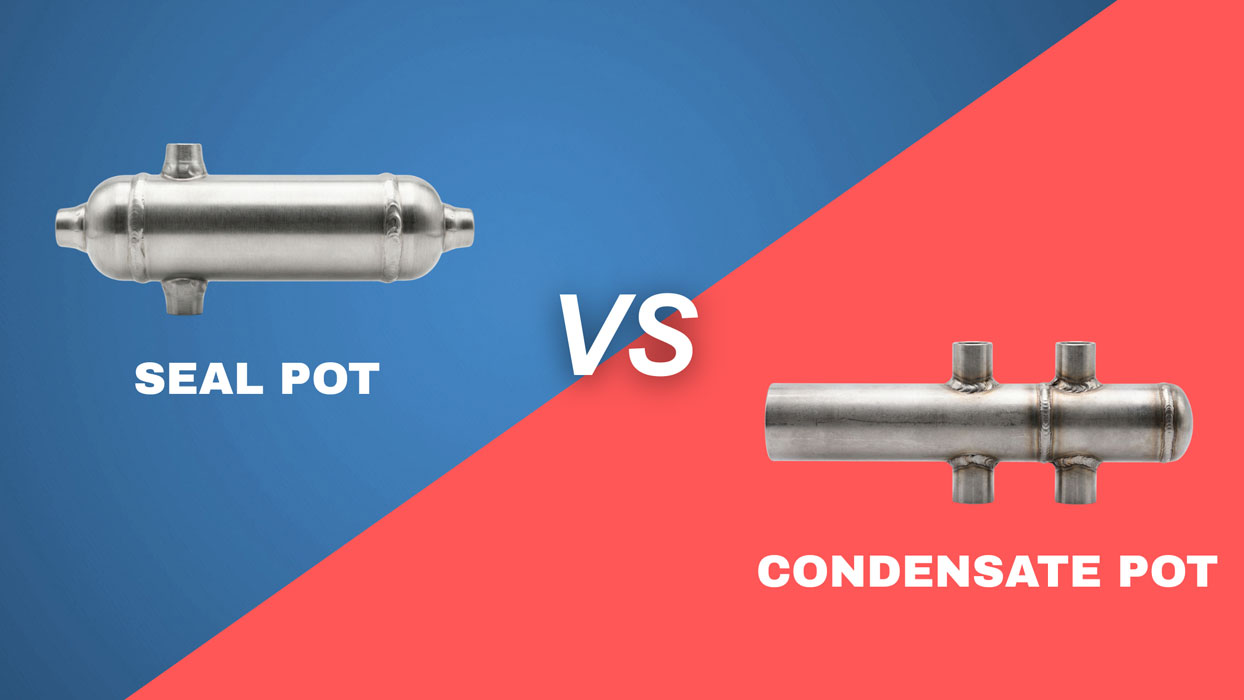
In industrial instrumentation and steam systems, protecting sensitive measuring instruments from high temperature, pressure fluctuations, and corrosive media is extremely important. Two commonly used components for this purpose are seal pots and condensate pots.
Although both devices are used in pressure measurement systems and appear similar in construction, their functions and applications are different. Understanding the difference between a seal pot and a condensate pot helps industries select the correct solution for accurate measurement, equipment protection, and reliable process performance.
At Arrotop, high-quality condensate pots and industrial flow accessories are engineered for reliable performance in demanding industrial applications.
What is a Condensate Pot?
A condensate pot is a cylindrical vessel installed in steam or vapor service lines to collect condensate formed inside impulse piping systems. It helps protect pressure transmitters, gauges, and differential pressure instruments from direct exposure to high-temperature steam.
In steam systems, some steam naturally condenses into water while traveling through the impulse line. The condensate pot collects this liquid and maintains a stable liquid column, helping ensure accurate pressure measurement.
Working Principle of a Condensate Pot
The condensate pot works by collecting condensed steam before it reaches sensitive instrumentation equipment.
How It Works:
- Steam enters the impulse line.
- Part of the steam condenses into liquid due to cooling.
- The condensate accumulates inside the condensate pot.
- The stored liquid forms a stable barrier between the steam and the measuring instrument.
- This protects instruments from excessive temperature and pressure fluctuations.
Applications of Condensate Pots
Condensate pots are widely used in:
- Steam power plants
- Boiler systems
- Oil & gas industries
- Petrochemical plants
- Refineries
- HVAC systems
- Differential pressure flow measurement systems
What is a Seal Pot?
A seal pot is a protective vessel used mainly in liquid, corrosive, or viscous fluid applications. It maintains a liquid seal between the process fluid and the measuring instrument, preventing harmful media from directly entering impulse lines or instrumentation systems.
Seal pots are commonly used where the process fluid is corrosive, toxic, slurry-based, or capable of damaging sensitive instruments.
Working Principle of a Seal Pot
A seal pot operates by maintaining a sealing liquid inside the vessel that acts as a protective barrier.
How It Works:
- The seal pot is filled with sealing liquid such as water or glycol.
- Process pressure is transmitted through the sealing liquid.
- The sealing liquid prevents corrosive gases or fluids from directly contacting the measuring instrument.
- This improves instrument protection and measurement stability.
Applications of Seal Pots
Seal pots are commonly used in:
- Chemical processing plants
- Acid handling systems
- Petrochemical industries
- Slurry applications
- Wastewater treatment plants
- High-viscosity fluid systems
Key Differences Between Seal Pot and Condensate Pot
| Feature | Seal Pot | Condensate Pot |
| Primary Function | Creates a liquid barrier for protection | Collects condensate from steam systems |
| Used With | Corrosive or viscous liquids | Steam and vapor systems |
| Purpose | Prevents harmful media from entering instruments | Protects instruments from high-temperature steam |
| Medium Handled | Liquids, chemicals, slurries | Steam condensate |
| Common Industries | Chemical, wastewater, petrochemical | Power plants, steam systems, refineries |
| Installation | Usually vertical | Usually horizontal or vertical |
| Instrument Protection | Corrosion and contamination protection | Temperature and condensate protection |
Types of Condensate Pots
Different industrial systems require different condensate pot configurations.
1. Pipe Type Condensate Pot
Pipe type condensate pots are compact and commonly used in standard steam applications.
Advantages:
- Simple construction
- Easy installation
- Cost-effective
2. Fabricated Condensate Pot
Fabricated condensate pots are designed for high-pressure and customized industrial systems.
Applications:
- Refineries
- Petrochemical plants
- Power generation industries
Advantages:
- High durability
- Suitable for harsh operating conditions
- Customizable sizes and connections
Material Grades of Condensate Pots
Condensate pots are manufactured in different material grades based on pressure, temperature, and corrosion requirements.
1. Stainless Steel Condensate Pot
Common Grades:
- SS304
- SS316
- SS316L
Advantages:
- Excellent corrosion resistance
- High-temperature capability
- Long service life
Widely Used In:
- Chemical industries
- Pharmaceutical plants
- Steam systems
- Food processing industries
2. Carbon Steel Condensate Pot
Advantages:
- High mechanical strength
- Suitable for high-pressure applications
- Economical solution
Applications:
- Power plants
- Oil & gas industries
- Utility steam systems
3. Alloy Steel Condensate Pot
Advantages:
- Excellent pressure handling capability
- Suitable for extreme temperatures
- High durability
Applications:
- Petrochemical plants
- High-temperature steam systems
- Refinery operations
Benefits of Using Condensate Pots and Seal Pots
Instrument Protection
Protects pressure transmitters and gauges from extreme operating conditions.
Improved Measurement Accuracy
Maintains stable pressure conditions for accurate readings.
Reduced Maintenance
Prevents direct exposure of instruments to steam or corrosive media.
Longer Equipment Life
Minimizes wear caused by temperature fluctuations and contamination.
Enhanced Process Safety
Improves system reliability and operational stability.
Why Choose Arrotop Condensate Pots?
Arrotop Condensate Pots & Flow Accessories are designed for reliable performance in demanding industrial environments.
Key Features:
- Precision-engineered construction
- High corrosion resistance
- Leak-proof performance
- Long operational life
- Suitable for high-pressure and high-temperature applications
- Available in multiple material grades and configurations
Arrotop delivers dependable industrial flow accessory solutions for steam, instrumentation, and process control systems.
Conclusion
Seal pots and condensate pots are essential components in industrial instrumentation systems. While both devices help protect sensitive instruments, they serve different purposes based on the process media and application requirements.
Condensate pots are mainly used in steam and vapor systems to collect condensate and maintain accurate pressure measurement, whereas seal pots create a protective liquid barrier in corrosive or viscous fluid applications.
Selecting the right solution improves process efficiency, instrument safety, and system reliability.
For high-quality condensate pots and industrial flow accessories, explore the advanced product solutions offered by Arrotop.