
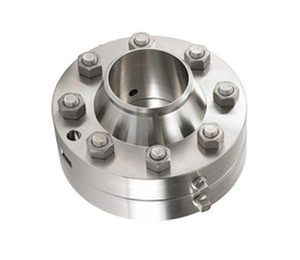
What is Aerofoil?
An aerofoil, also known as an airfoil, is a structure with a curved shape that is designed to produce a specific aerodynamic force when it interacts with a fluid, typically air. The most common application of an aerofoil is in the design of wings for aircraft. The shape of an aerofoil is characterized by its curved upper surface and flatter lower surface.
Product Data
Aerofoil
Arrotop aerofoil is meticulously crafted for measuring flow in square or rectangular ducts, providing a valuable solution for ducts where traditional flow elements such as orifices and flow nozzles are impractical. We specialize in and excel as manufacturers of aerofoils.
Comprising aerodynamic shaped foils, this design minimizes fluid resistance. The characteristic profile of the aerofoil provides a smooth passage for the fluid, resulting in reduced pressure drop and increased efficiency.
Design
Arrotop Aerofoil works based on the correlation between flow velocity and pressure fields within the flow section. It comprises a set of foils, typically two as a standard, with each foil adopting a shape reminiscent of an aircraft wing.
In operation, the fluid flows between the foils, inducing a pressure drop. Pressure sensing ports are strategically positioned on the face and backside to detect upstream and downstream pressures, respectively.
These ports are linked to two separate header pipes, each providing the respective upstream and downstream pressure readings. The difference between these readings serves as the input for calculating the flow rate.
In the design process of the aerofoil for a rectangular duct, the dimensions are initially converted to an equivalent circular section for sizing purposes. After sizing, the results are then transformed back to the original rectangular dimensions.
Supplied with a flanged end held in the line using fasteners, and the flange drilling can be customized based on specific requirements.
Features :
- Optimal for use in duct piping.
- Typically employed in low-pressure environments.
- The aerofoil is commonly utilized in applications involving air or gas.
- Restricted for use with viscous fluids due to the potential for blocking the pressure sensing ports of the device.
- Maintenance-free as there are no moving parts.
- Requires shorter straight lengths.
Applications of Aerofoil
- Aircraft Wings: One of the most prominent applications of aerofoils is in aircraft wings. The shape of the wing’s cross-section, typically modeled after an aerofoil, generates lift as air flows over it. This lift force allows aircraft to overcome gravity and achieve flight. Aerofoils are designed to minimize drag while maximizing lift, contributing to the efficiency and performance of aircraft.
- Wind Turbine Blades: Aerofoils are utilized in the design of wind turbine blades to capture kinetic energy from the wind and convert it into rotational mechanical energy. The airfoil shape of the blades enables efficient lift production as the wind flows over them, driving the rotation of the turbine’s rotor and generating electricity.
- Hydrofoil Boats: Hydrofoil boats employ aerofoil-shaped hydrofoils mounted beneath the hull to lift the vessel’s hull above the water surface as it gains speed. This reduces hydrodynamic drag, allowing the boat to achieve higher speeds with less power consumption. Aerofoil-shaped hydrofoils are crucial for providing lift and stability to hydrofoil boats, enhancing their performance on water.
- Automobiles and Racing Cars: Aerofoils, often in the form of spoilers, wings, or diffusers, are used in automobile and racing car designs to manipulate airflow and improve aerodynamic performance. By strategically placing aerofoils on vehicles, engineers can enhance downforce, reduce drag, and optimize handling at high speeds, thus improving stability and traction.
- Rotor Blades in Helicopters: The rotor blades of helicopters feature an aerofoil cross-section to generate lift as they rotate through the air. The aerofoil shape allows helicopters to generate vertical lift and control their altitude and direction of flight. Advanced rotor blade designs optimize aerodynamic performance, fuel efficiency, and maneuverability.
- Sailboat Sails: Sailboat sails are designed with an aerofoil shape to harness the force of the wind and propel the vessel forward. The curved shape of the sail generates lift similar to an aircraft wing, allowing sailboats to sail both upwind and downwind by adjusting the angle of the sail relative to the wind direction.
- Turbomachinery Blades: Aerofoils are employed in the design of blades for turbomachinery such as turbines, compressors, and fans used in power generation, aerospace, and HVAC systems. These blades are optimized for efficient airflow management, pressure recovery, and energy conversion, contributing to the performance and reliability of turbomachinery.
Advantages of Aerofoil
- Lift Generation: Aerofoils are designed to generate lift when air flows over their curved surfaces. This is essential for the flight of aircraft, allowing them to overcome gravity and stay airborne.
- Efficient Use of Energy: The streamlined shape of aerofoils minimizes drag, making them energy-efficient. This is crucial for aircraft and other applications where reducing resistance is important.
- Controlled Flight: Adjustable aerofoils, such as flaps and slats on aircraft wings, allow for control of lift and drag. Pilots can manipulate these surfaces to control the aircraft during takeoff, landing, and flight.
- Versatility: Aerofoils are versatile and can be adapted for various applications beyond aviation, including wind turbine blades, propellers, and flow measurement devices.
- Stability: The inherent stability provided by aerofoils contributes to the overall stability and control of aircraft during flight.
- Predictable Performance: The aerodynamic principles governing aerofoils are well understood, allowing for predictable performance in different conditions. This predictability is crucial for safe and efficient flight.
- Optimization: Advances in aerodynamics and computational modeling enable the optimization of aerofoil shapes for specific applications, leading to improved performance and efficiency.
- Reduced Fuel Consumption: In aviation, the efficient lift generation and reduced drag associated with well-designed aerofoils contribute to lower fuel consumption, enhancing the overall efficiency of aircraft.
- Quiet Operation: The streamlined flow around aerofoils helps minimize noise generation, contributing to quieter operation in certain applications.
- Adaptability: Aerofoils can be designed and adapted to suit specific requirements, making them applicable to a wide range of industries and technologies.